
10 tools for values-aligned advice I’ve discovered in 10 years of ethical investing
Jul 31, 2026
Today, Ethical Invest Group (EIG) celebrates its 10-year anniversary.

In this blog, Ethical Invest Group’s founder, Alexandra Brown, reflects on 10 years in business and more than 11 years working in ethical investing alongside financial advisers across Australia and Aotearoa New Zealand. During that time, Alexandra has gathered many practical lessons about ethical investment advice, and this anniversary is the perfect opportunity to share some of the tools she now considers most valuable.
Over to you, Alexandra...
Reaching this milestone has had me reflecting on how much ethical and sustainable investing has changed – and how much the work of providing values-aligned financial advice has changed with it.
When you’re in the middle of building a business, developing resources and responding to an industry that continues to evolve, it’s easy to focus on the massive to-do list in front of you. But taking a moment to look across a full decade makes it clear just how far EIG and the ethical investment industry have come.
When I studied business and finance in 2010, 'socially responsible investing' received just one paragraph in one textbook.
That was it.
By 2016, when I sat on the investment committee of a financial planning firm, the number of funds marketed as 'ethical' was still small enough that I could research most of them manually. I would review the available documents, investigate their holdings and processes, speak with fund managers and compare the relatively limited number of options.
From around 2020 onwards, the landscape shifted dramatically.
There was a rapid rise in the number of funds, ETFs, superannuation options and KiwiSaver funds making ethical, responsible or sustainable claims. Investment approaches became more varied, the language became more complicated and researching every option manually was no longer realistic.
Better research tools became necessary. But over the past decade, I’ve also learned that values-aligned advice depends on much more than finding a fund with the right label.
It requires better conversations, careful documentation, a repeatable research process and the ability to explain complexity without overwhelming the client.
Along the way, I also became clearer about where Ethical Invest Group could make the greatest contribution.
Financial advisers sit at an important point in the investment chain – at the beginning. By helping one adviser develop their capability in values-aligned advice, the impact can extend to hundreds of clients and the many investment decisions they make over time.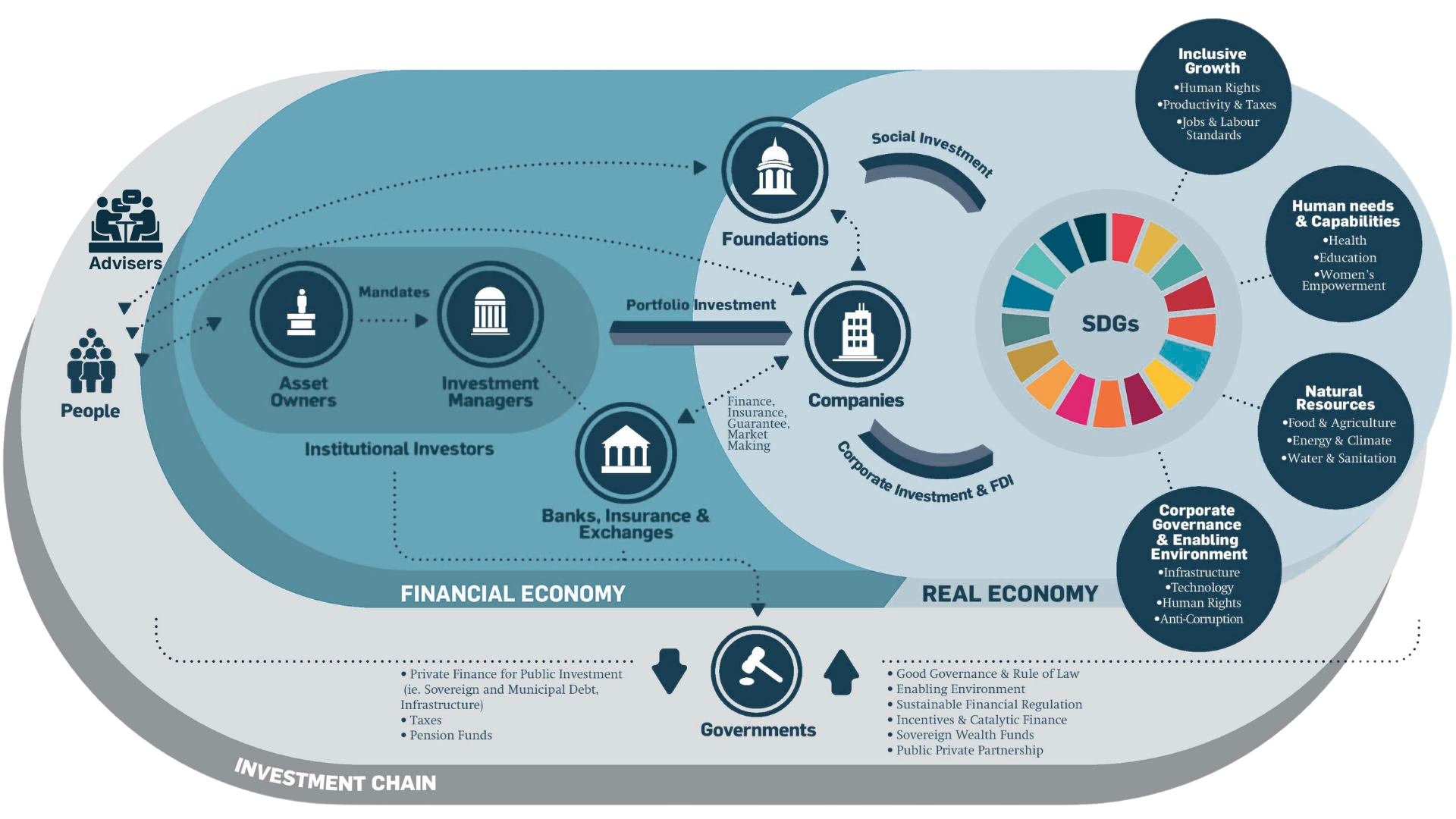
Source: Adapted from UNGC (2017) Guide to unlocking prosperity: Finance, investment and sustainable development
That realisation shifted my work from predominantly researching and consulting with advisers one-to-one towards creating education, frameworks and tools that could support advisers at scale.
These tools and assets were not developed in isolation. They have been shaped through years of conversations with specialist ethical advisers across Australia and Aotearoa New Zealand, fund managers, researchers, industry networks, course participants and clients.
Those conversations have repeatedly shown me where advice processes work well, where misunderstandings arise and where advisers need more practical support.
These are 10 of the tools I now consider most valuable.

1. A better opening question
One of the simplest tools is also one of the most important: asking a better question.
“Are you interested in ethical investing?” rarely gives an adviser enough useful information.
A client may answer no because they are unfamiliar with the terminology, assume ethical investments perform poorly or believe their concerns are too difficult to accommodate. Another client may answer yes, while using the word “ethical” in a completely different way from the client you spoke with yesterday.
A more productive conversation could include the following:
Are there any issues, industries or business practices you would particularly like your money to avoid, support or influence?
The objective is not to find one perfect question. It is to give clients permission to talk about what matters to them and to explore preferences they may never previously have connected with their investments.
2. An avoid, support and engage framework
Ethical investing is often reduced to exclusions: what does the client want to avoid?
Exclusions matter, but they are only one part of the picture.
I find it more useful to consider three broad approaches:
Avoid: Which activities, industries or behaviours would the client prefer not to support?
Support: Which companies, industries, solutions or outcomes would they like their money to help advance?
Engage: Where might they be comfortable remaining invested while fund managers use voting, engagement and escalation to influence company behaviour?
This helps advisers move beyond a binary ethical-or-not-ethical conversation. It also recognises that two clients who care about the same issue may prefer very different investment strategies.
One client may wish to avoid a company entirely, while another may be comfortable remaining invested where there is credible evidence that ownership is being used to encourage meaningful change.

3. A comprehensive values questionnaire
Most clients cannot name every issue that may matter to them without some prompting.
They may immediately mention climate change, fossil fuels or weapons but never have considered surveillance technology, predatory lending, labour rights, taxation practices, gambling, animal welfare, biodiversity loss or supply-chain exploitation in an investment context.
A well-designed questionnaire can introduce a broad range of environmental, social, governance, cultural and belief-based considerations. It can also help clients identify what they would like to support, rather than focusing solely on harm.
The questionnaire's purpose is to support a more informed conversation, not an automatic advice recommendation. The adviser still needs to explore what each response means, how strongly the client feels and whether the issue represents a preference or a firm boundary.
This is particularly important when clients use the same words but hold different expectations. “Avoid fossil fuels,” for example, may mean avoiding producers for one client and avoiding producers, financiers, service providers and companies expanding fossil fuel infrastructure for another.
4. A prioritisation process
Clients often care about many issues. Investment products rarely align perfectly with all of them.
A prioritisation tool helps distinguish between:
- non-negotiable exclusions
- strong preferences
- positive outcomes the client would like to support
- areas where limited exposure may be acceptable
- issues on which the client has not formed a firm view
It also makes trade-offs easier to discuss. One client may consider avoiding companies materially involved in weapons essential, while accepting some indirect fossil fuel exposure within a diversified portfolio. Another may prioritise climate solutions while preferring engagement over broad exclusions.
The adviser’s role is to understand what matters most to the client, where compromises may be necessary and what the client is comfortable accepting, and translate those priorities into a suitable investment strategy.
This prioritisation process can stop the search for perfect alignment from becoming overwhelming.
5. A shared language guide
Ethical, responsible, sustainable, green, impact and ESG are frequently used as though they mean the same thing.
They do not.
Even where the same term is used, different fund managers – and different clients – can mean very different things by it.
Creating a shared language with the client helps reduce assumptions. It allows the adviser to clarify whether a client is primarily concerned with avoiding harm, supporting solutions, managing sustainability-related financial risks, generating measurable impact or combining several approaches.
This is particularly important in Australia and Aotearoa New Zealand, where advisers may be comparing managed funds, ETFs, superannuation options, KiwiSaver funds and other investment products using a wide range of overlapping labels.
While regulators have focused on the need for sustainability-related claims to be clear and substantiated, a label alone does not demonstrate that a product will meet the client’s expectations.
Advisers need to understand the process behind the terminology and be able to explain it in plain language.

6. A repeatable product-research framework
When there were only a handful of ethical funds available, informal manual research was possible.
That is no longer enough.
A repeatable research framework helps advisers compare products consistently and look beyond the marketing language. Depending on the product, the research might examine:
- the stated investment philosophy and objectives
- the activities and companies screened out
- definitions, materiality thresholds and exceptions
- positive selection or preferencing
- portfolio construction and external managers
- stewardship, voting and engagement
- underlying holdings
- reporting, transparency and accountability
- whether the stated approach is reflected in practice
The materiality thresholds deserve particular attention.
A fund may say it excludes fossil fuels, weapons or gambling, but the exclusion might apply only where a company earns more than a particular percentage of revenue from that activity. It may cover production but not distribution, financing or related services. It may also be applied differently across asset classes.
In some cases, a fund may apply a broad exclusion to its listed equities while clients retain exposure through fixed income, infrastructure, property, private assets or an external underlying manager.
The label begins the research. It should never end it.
7. Comparison and research platforms
The growth in investment options has made specialist research platforms far more important than they were when I first started.
Responsible Returns provides information on responsible and ethical superannuation, KiwiSaver, banking and investment products certified under RIAA’s Australian and New Zealand Responsible Investment Standard. It can be a useful place to begin when looking across products in both Australia and Aotearoa New Zealand.
Mindful Money helps investors explore KiwiSaver and managed funds in Aotearoa New Zealand, while Mindful Investing gives Australians greater visibility into the publicly disclosed holdings of selected superannuation funds.
I see these public platforms as a very useful first step, particularly for retail investors who want to better understand what may sit beneath a product name or label. They can also help advisers identify investments that need closer investigation.
But they are still only the beginning of the research process.
For an adviser, the next step needs to go much deeper. That may include paid research apps and professional research, product disclosures, responsible investment policies, holdings information, stewardship and voting reports, direct questions to fund managers and other reports available within the advice practice.
One of the biggest lessons for me over the past decade is that research tools can save an enormous amount of time, but they do not remove the need for judgement. Advisers still need to understand what a platform includes, what it leaves out and how the findings relate to the individual client’s priorities.
8. A holdings look-through process
A product’s underlying holdings can reveal information that its name cannot.
Looking through the portfolio helps an adviser investigate whether the exposure is consistent with the product’s stated process and the client’s priorities.
However, a holding should not always be interpreted in isolation.
A company may remain in a portfolio because:
- its exposure falls below the fund’s materiality threshold
- only part of its business is involved in the activity
- it is being held as part of an engagement strategy
- the manager sees credible transition potential
- the strategy tracks an index with defined constraints
- the exposure arises indirectly through another fund, derivative or asset class
The tool is not simply a list of “good” and “bad” holdings. It is a process for identifying what requires further investigation and understanding why the exposure exists.
A holding may raise some flags, but its presence alone does not explain the manager’s approach, the size of the exposure or its role in the portfolio.
Advisers still need to determine whether that exposure is likely to be acceptable to the client.
9. A stewardship and voting lens
Values-aligned investing is not only about deciding which companies should be excluded.
Investors can also influence companies through voting, engagement, shareholder resolutions and escalation. Some ethical and sustainable investment approaches retain holdings in companies facing environmental, social or governance concerns so ownership rights can be used to encourage improvement.
This can be a very grey area, however, and it is also open to greenwashing. Claims about engagement are easy to make. What matters is whether the manager can show what action has been taken, what outcomes have been achieved and what happens when a company fails to respond.
When assessing a fund manager, useful questions include:
- Does the manager publish its voting record?
- Are its voting decisions consistent with its stated policies?
- Which issues and companies does it engage on?
- What outcomes has that engagement achieved?
- What happens when a company fails to respond?
- Is there a clear escalation process?
- At what point would the manager consider divestment?
The outcomes are especially important. Without clear reporting, advisers and clients are left wondering whether the engagement is meaningful or simply another sustainability claim with little or no positive impact.
A fund may have a short exclusions list but a strong, transparent stewardship program. Another may make ambitious claims about active ownership while providing little evidence of its actions or results.
Advisers need to assess both the manager’s exclusions and the strength of its active ownership approach.
10. A documented review process
Values alignment should not be treated as a question asked once during the initial fact find.
Clients’ priorities can change. Products can alter their policies, holdings, thresholds or investment teams. Fund managers can strengthen their processes – or fail to live up to their stated commitments. New sustainability issues and investment options continue to emerge.
A values-aligned review process might include:
- confirming whether the client’s priorities have changed
- revisiting previously accepted compromises
- checking for material changes to recommended products
- reviewing updated holdings, voting and stewardship information
- recording how the recommendation continues to address the client’s preferences
- reassessing alignment when adding or replacing investments
Documentation is important not only for demonstrating the basis of the advice, but also for ensuring the client feels heard.
The client file should show how the conversation moved from broad values to agreed priorities, how the products were assessed and where any compromises were knowingly accepted.
It should also record what the adviser explained. This may include the limitations of the available products, differences between the client’s preferred and recommended approach, material thresholds, remaining exposures and the reasons the strategy was considered appropriate.
The tool behind all the others
After 10 years, we have access to far more data, research platforms and product information than we did when I began.
Yet the most valuable tool is still the adviser’s ability to ask meaningful questions confidently.
It is the ability to listen without making assumptions, investigate beyond the label, explain trade-offs honestly and connect a client’s financial strategy with the issues they care about.
There is no perfect investment portfolio. There is rarely one product that reflects every value without compromise.
Values-aligned advice is not about promising perfection.
It is about applying a thoughtful and repeatable process so the client can make an informed decision – understanding where their investments align, where compromise remain and why the recommendation is appropriate for them.
One of the things I still find most motivating is the ripple effect of adviser education.
When an adviser becomes more confident in values-aligned advice, the benefit does not stop with that adviser. It reaches the clients they serve, the families and communities those clients connect with, and the investment decisions made over many years.
That is why supporting advisers has become such an important part of Ethical Invest Group’s work.
I am deeply grateful to the advisers, researchers, fund managers, industry organisations, course participants, clients, colleagues and supporters who have shared their knowledge, questions and experiences with me over the past decade.
These tools have been refined through those conversations, and Ethical Invest Group would not have reached this milestone without that community.
Build your values-aligned advice toolkit
The Sustainable Investment Advice course was created to help financial advisers across Australia and Aotearoa New Zealand develop the knowledge, processes and practical tools required to provide values-aligned advice with greater confidence.
If any of these 10 tools stand out to you, and you want to learn more, the Sustainable Investment Advice training is for you.
Across eight comprehensive modules, the CPD-accredited course covers the foundations and market drivers of sustainable investing; climate, nature and wider environmental, social and governance issues; stewardship and engagement; client conversations; product research; implementation; and the integration of ethical and sustainable investing into your advice process.
It is designed to help you move beyond a single fact-find question or reliance on product labels and establish a service that is practical, robust and relevant to the clients you advise.
By strengthening your own knowledge and processes, you can help more clients understand what their money supports, make informed decisions about the compromises involved and use their investments to reflect the future they would like to help create.
Learn more about the Sustainable Investment Advice course.

Disclaimer:
This information is issued by Ethical Invest Group (EIG) (ABN 29 238 432 149) in relation to ethics, values, and sustainability in financial advice.
The value of investments and the income from them may go down as well as up and investors may not get back the amounts originally invested. Exchange rate changes may cause the value of any investments to rise or fall. This information is not an offer, solicitation or recommendation to buy or sell any financial instrument or to adopt any investment strategy. Although EIG believes that all this information is accurate and reliable, no warranty or accuracy or reliability as to such information is given and no responsibility for loss arising in any way from or in connection with errors or omissions in any information provided (including responsibility to any person by reason of negligence) is accepted by EIG or by any of its agents or employees or by any person providing notes or materials. Any data has been sourced by us and is provided without any warranties of any kind. It should be independently verified before further publication or use. Third-party data is owned or licenced by the data provider and may not be reproduced, extracted or used for any other purpose without the data provider’s consent. Neither we, nor the data provider, will have any liability in connection with the third-party data. Material may include links to other resources and websites. These links are provided for your convenience only and do not signify that EIG endorses, approves or makes any representation or claim regarding the accuracy, copyright, compliance, legality, or any other aspects of the resources or websites. The material is not intended to provide, and should not be relied on for financial, accounting, legal or tax advice, or the rendering of consulting, or other professional services. Reliance should not be placed on any views or information in the material when taking individual investment and/or strategic decisions. No responsibility can be accepted for error of fact or opinion. Any references to securities, sectors, regions and/ or countries are for illustrative purposes only. EIG has expressed its own views and opinions in this document and these may change. The contents of the information provided is for your general information and use only. It is subject to change at any time and without notice.
JOIN OUR NETWORK
We’ll ensure you’re informed with regular tips and updates that we love to share with our professional network of leading financial advisers and industry professionals.
Keep up to date with the latest and most compelling trends, research and actions you can take to enhance your adviser-client relationship, and stay in the loop about ESG and ethical investing.


